
Policy, Timing, and the Full Stack: How Infrastructure Actually Scales
Where infrastructure actually gets stuck — and what happens when the clocks don't match.

Friday evening at Island Cabana Bar & Ship Store, I watched a black skimmer working the water’s edge. If you’ve never seen one eat, and it does look like it’s drinking, it’s worth stopping for. There’s something hypnotic about it. The bird hovers low over the surface, that long lower mandible cutting through the water like a precision instrument. It moves with absolute focus. No wasted motion. Just perfect timing, perfect angle, perfect rhythm.
You watch long enough and you start noticing the grace in it. The way the bird understands the water’s surface, the light, the position of small fish just beneath. It looks simple. It’s actually a masterpiece of evolutionary coordination.
I’m thinking about that bird as I write this on the weekend, anticipating what’s coming Monday.
Monday morning, I’ll be in a room full of port executives, utility planners, equipment manufacturers, charging providers, and public officials at the Powering Ports: SC Port Electrification Summit in Charleston. The conversation happening in that room is exactly what this week’s infrastructure observation is about.
Because what I’ve been watching unfold over the past few weeks, months, and years, the regulatory gaps, the timing misalignments, the full-stack orchestration requirements, well that’s the real work Monday is designed to address.
The bird hovers low, blade-sharp focus. Everything synchronized. That’s the problem we’re solving on the land, one day at a time.
Video: Black skimmer at Island Cabana Bar & Ship Store, Folly Beach. The precision is the point — that long lower mandible cutting through water, timing synced to the surface, everything coordinated. This is how systems work when they work.
---
Thread One: The Regulatory Synchronization Problem
Earlier this year, I was at Wando Welch Terminal in the Charleston region. Hard hat. High-vis. Walking the yard with the SC Ports Authority team, looking at the electrical backbone that supports a full-scale port electrification transition.
The reefer yards. The power distribution infrastructure. The gap between what the grid currently delivers to the fence line and what electrified cargo handling equipment actually demands.
That gap is real. And it’s not a technology problem. The technology exists. Electric cargo handlers are proven. Electrified reefer containers work. The systems are ready.
It’s a regulatory and sequencing problem. And here’s where it gets interesting — because this is where most infrastructure conversations go silent.
Who funds the grid upgrade? Who owns the interconnection risk? How does a port authority plan capital expenditure around a utility queue that wasn’t designed for this kind of load growth? What happens when the policy incentive timeline doesn’t match the infrastructure build timeline?
Here’s the honest assessment: Policy shapes infrastructure timelines more than technology does. Most people don’t see that until they’re standing in the middle of it.
The real problem at a port like Wando Welch isn’t whether electrification is possible. It’s whether everything can move in sync. The utility planning cycle runs on a five-to-ten-year horizon. The interconnection queue typically stretches three to five years. Port capital planning operates on annual budgets tied to bond financing. Equipment manufacturers have six-to-twelve-month delivery cycles. Policy incentives come with their own timelines, often tied to federal grant programs or state legislation that moves on a completely different clock.
When those timelines don’t align, infrastructure slips. Not because anyone is opposed. Because the regulatory structures, utility planning cycles, interconnection processes, and capital cycles all run on different rhythms. And nobody has fully solved how to synchronize them yet.
That’s where Monday’s conversation comes in. The Powering Ports: SC Port Electrification Summit, co-hosted by the South Carolina Ports Authority, Electrification Coalition, SC Energy Office, with equipment manufacturers, charging providers, utilities, and local government all in the same room. The agenda isn’t aspirational. It’s operational. Deployment readiness. Grid infrastructure gaps. Financing structures. Who carries stranded asset risk if the sequencing breaks down.
That last one matters more than most people realize. If you invest $50 million in grid infrastructure to support port electrification, and policy incentives shift mid-project, or equipment timelines slip, or utility priorities change, who absorbs that loss?
That’s the systems problem that determines whether electrification happens on schedule or gets pushed five years down the road.
---
Thread Two: The Cost of Waiting is Now Bigger Than the Asset Cost
The conversation in energy used to center on one question: What’s the lowest cost per kilowatt-hour?
The conversation is shifting. The new question is: How fast can we get power where it’s needed?
I’m seeing this across manufacturing, data centers, ports, airports, campuses, and critical infrastructure. The economics have flipped.
For a manufacturer running 24/7 production, waiting 12-24 months for a grid upgrade to support expanded electrification can cost millions in production delays, supply chain disruption, and missed market windows. The cost of waiting can exceed the cost of the energy storage system itself.
For a data center operator facing capacity constraints, delaying electrification and storage deployment means either capping growth or paying premium grid rates while waiting for infrastructure upgrades. When your operating costs are tied to power availability and power timing, speed to deployment becomes a competitive advantage.
For a port authority, the window for capital projects is narrow. Bond financing, federal grant cycles, stakeholder alignment — it all has to move together. Miss the window, and the next funding opportunity might be three years away. By then, the competitive landscape has shifted.
That’s why speed to deployment is no longer a nice-to-have. It’s a business requirement. And the projects that move first in their markets create advantages that last for years.
The companies winning right now aren’t optimizing for lowest cost per kilowatt-hour anymore. They’re optimizing for: When can we actually deliver, and what does that save us compared to waiting?
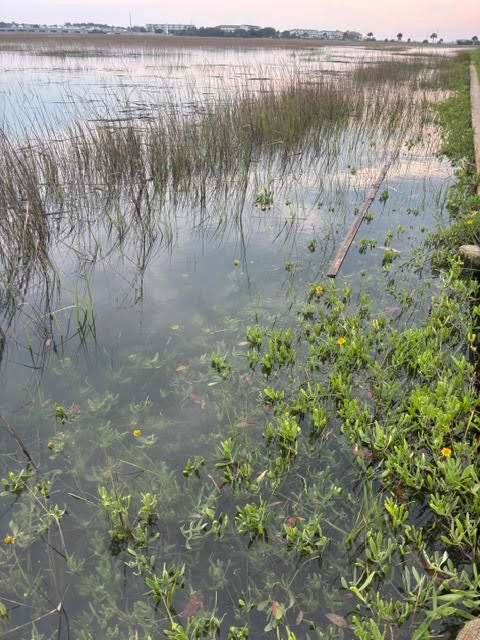

Images: Saltwater-tolerant flowers emerging from the tide, Folly Beach marshes. Resilient. Adapted. Alive. The systems that last are the ones built to flex with the environment, not against it. Same principle whether it’s natural or infrastructure.
---
Thread Three: Australia Shows What Full-Stack Orchestration Looks Like
A few weeks ago, I ran a poll: Which incentive and control stack actually scales distributed energy deployment fastest?
Sixty-five votes came back. Sixty-eight percent selected: Fully stacked. All layers.
That result has been sitting in the back of my mind. Not because it was surprising. Because it matches exactly what the market is teaching us.
Australia is the clearest signal. Over 4 million rooftop solar systems deployed across the country. More distributed generation than utility generation in some regions. It’s not a future scenario. It’s happening now.
But here’s what most people miss: After 15 years of national-scale rooftop solar deployment, the real work isn’t just getting more assets on the grid. It’s orchestration.
Export limits. Customer compensation for exported power. Interoperability between different manufacturers’ systems. Cybersecurity standards. Grid coordination protocols. Market participation frameworks so distributed generators can participate in wholesale markets.
Project Symphony in Western Australia offers a concrete example. The project went beyond just deploying solar and batteries. It integrated rooftop solar, home batteries, flexible loads, and electric vehicles into a coordinated system where homes could actually participate in grid services — providing power during peak demand, storing excess generation, managing charging based on grid signals.
The result: Home owners saw real savings. The grid got genuine flexibility. The utility gained reliable capacity. But it only worked because everything was orchestrated together.
Now multiply that across Canada (British Columbia, Ontario, etc.), Hawaii, California, and you see the same pattern everywhere. The jurisdictions winning aren’t the ones with the best incentives. They’re the ones synchronizing incentives, controls, market participation, and utility coordination.
Here’s what that looks like operationally:
**The 2–5 Year Challenge (Program Design):**
- Upfront incentives for deployment
- Ongoing payments for grid services
- Bill savings mechanisms that work with utility tariffs
- Utility coordination protocols
- DERMS (Distributed Energy Resource Management Systems) and VPP (Virtual Power Plant) participation frameworks
- Vendor engagement and equipment standards
- Cybersecurity and interoperability requirements
**The 5–10 Year Challenge (Scale):**
- Bidirectional homes, fleets, and buildings that can both consume and supply power
- Microgrids and resilience networks operating at neighborhood and community scale
- Market participation for distributed assets (utilities, homes, businesses all bidding into wholesale markets)
- Long-term risk mitigation and stranded asset protection
- Community trust and equitable distribution of benefits
- Measurable grid value that justifies continued investment
The lesson isn’t that incentives don’t matter. The lesson is that incentives alone rarely scale a market. Technology alone doesn’t work. Single-layer solutions don’t scale.
What scales is orchestration. Policy + incentives + controls + market participation + utility coordination + customer engagement + cybersecurity + interoperability. All connected. All moving together.
The companies that understand this distinction are the ones executing successfully. The ones still thinking single-layer solutions are already behind.
---
The Pattern
So here’s what I’m watching unfold: *Infrastructure doesn’t move on technology alone. It doesn’t move on policy alone. It doesn’t move on incentives or speed or systems thinking in isolation.*
Infrastructure moves when everything synchronizes.
Policy and regulatory structures determine whether deployment is possible at all. Timing and speed determine competitive advantage. Full-stack orchestration — connecting incentives, controls, market structures, utility coordination, and customer engagement — determines whether single projects become scalable systems. And underneath all of it, you need the kind of thinking that sees infrastructure the way the black skimmer sees the water: as something requiring precision coordination across multiple layers, all working at the right moment.
That’s what regenerative design actually means when you’re building energy systems. Not just deploying assets. Building systems resilient enough to adapt as policy shifts, flexible enough to evolve as markets mature, and durable enough to serve communities reliably over decades.
The next five years are going to clarify which teams understand that. Not the ones that optimize for single variables. Not the ones waiting for perfect technology or perfect policy. The ones that synchronize everything at once.
I’ve been writing about infrastructure coordination and energy systems strategy for a while. This week, I’m expanding that work with more room to think deeply.
Regenerative Design is live, field notes on energy, natural systems, and infrastructure built to last. The first piece is up. It starts with a lake that used to be a river.
Because that’s where the real work happens. In the details. In the synchronization. In understanding that the best systems, whether they’re birds skimming the water, distributed energy networks spanning continents, or ports electrifying their operations, all follow the same or similar natural principles.
Everything has to move together.
---
Subscribe to Regenerative Design for field notes on energy, natural systems, and infrastructure built to last.
#EnergyInfrastructure #PolicyMatters #PortElectrification #GridModernization #BESS #DER #Microgrids #EnergyStorage #SystemsThinking #SouthCarolina #InfrastructureStrategy #EnergyTransition #MaritimeElectrification #PublicPrivatePartnerships #RegenerativeDesign #FieldNotes #CoastalInfrastructure #DistributedEnergy #CharlestonSC #Australia #ProjectSymphony